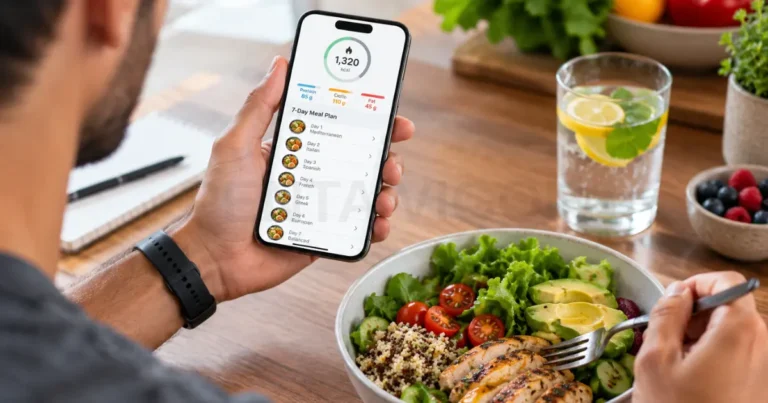
If you are wondering exactly how many calories should breakfast be for steady morning energy, the ideal target largely depends on your overall lifestyle. Once you determine how many calories should I eat a day, a helpful rule of thumb for a standard 2,000-calorie diet is to aim for roughly 400 calories at breakfast. This baseline leaves plenty of room for lunch, dinner, and snacks.
Splitting a Daily Budget Across Meals
You split a daily calorie budget by giving each meal a share of your total, typically 20 to 30 percent for breakfast and 30 to 40 percent for lunch and for dinner. First, you need a realistic estimate of your daily needs. The US Dietary Guidelines estimate about 1,600 to 2,400 calories a day for adult women and 2,000 to 3,000 for adult men, depending on age and activity.
European values follow the same logic. EFSA calculates average energy requirements by multiplying resting energy expenditure by physical activity levels of 1.4, 1.6, 1.8 and 2.0, which describe sedentary, moderately active, active and very active lifestyles. These averages assume a body mass index of 22 and suit groups better than individuals. A moderately active woman and a very active man can therefore differ by 1,000 calories or more, so the same breakfast may be too much for one and too little for the other.
These ranges are written for healthy, non-pregnant adults. Needs rise during pregnancy and breastfeeding, and EFSA estimates an extra 70, 260 and 500 calories a day across the three trimesters and 500 during exclusive breastfeeding. Speak with a doctor or registered dietitian before using these numbers if any of the following applies to you:
- You are pregnant, breastfeeding, or under 18
- You have diabetes or take glucose-lowering medicine such as insulin
- You have a history of disordered eating, or counting calories makes you anxious
- You are older than 65 or have lost weight without trying
- You have a kidney, liver or heart condition that comes with dietary limits
Common 25/35/30 and 30/40/30 distributions compared
The 25/35/30 and 30/40/30 distributions differ mainly in how much room they leave for snacks. The first assigns 90 percent of your day to three meals and keeps 10 percent for snacks and drinks, while the second uses the full 100 percent on meals. The UK 400-600-600 pattern rests on 20 percent of energy at breakfast and 30 percent at each of lunch and dinner, which leaves the largest snack allowance.
Calories per meal on a 2,000 calorie day
Pattern (breakfast/lunch/dinner) | Breakfast | Lunch | Dinner | Snacks and drinks |
UK 400-600-600 (20/30/30) | 400 | 600 | 600 | 400 |
25/35/30 | 500 | 700 | 600 | 200 |
30/40/30 | 600 | 800 | 600 | 0 |
Consider an illustrative example. A moderately active office worker who needs about 2,000 calories could eat 500, 700 and 600 calories on the 25/35/30 split, with 200 left for a piece of fruit and a milky coffee. On the 30/40/30 split, she would eat 600, 800 and 600 calories, and any snack would put her above her budget.
In the research we reviewed, no single distribution has proved better for everyone. Choose the one that matches when you are hungry, then scale it to your own total. At 1,800 calories the UK pattern becomes 360, 540 and 540 for the three meals, and at 2,500 calories it becomes 500, 750 and 750. Next, we look at whether the clock matters as much as the numbers.
Does Meal Timing Change Outcomes?
Meal timing appears to influence hunger and body-clock rhythms more than it changes how many calories your body burns. This field is called chrononutrition, the study of how the time of eating interacts with circadian rhythms, the roughly 24-hour cycles that regulate sleep, hormones and metabolism. Results so far are mixed, and many studies are small or short.
The Nordic Nutrition Recommendations 2023 reviewed meal patterns and concluded that the evidence is too limited to set guidelines. Their science advice is that meal patterns can vary within an energy-balanced and nutritionally adequate diet. In practice, the quality and quantity of your food matter first, and timing is a refinement you can adapt to your routine. The research on eating earlier in the day shows this best.
Evidence on front-loading energy earlier in the day
Front-loading energy, meaning eating more of your daily calories early, lowers hunger in some trials but has not been shown to speed up weight loss. In a 2022 crossover trial from the Rowett Institute, 30 adults with overweight or obesity followed two 4-week diets with identical calories. One placed 45 percent of calories at breakfast and 20 percent at dinner, and the other reversed that split.
Energy expenditure and weight loss were the same on both diets, yet people on the morning-heavy plan reported less hunger. The authors suggested that a bigger breakfast may help some people stay with a diet because it keeps appetite lower. This was a small trial in which all meals were provided, which is different from everyday life.
A BMJ meta-analysis of 13 randomized trials adds nuance. Adults assigned to eat breakfast consumed about 260 more calories a day than those who skipped it, and weighed about 0.44 kilograms more. However, the trials were short, all had a high or unclear risk of bias, and the authors urged caution. With that evidence in mind, we can turn to breakfast calorie ranges that work in real life.
Breakfast Calorie Ranges That Work
For most adults, a breakfast of about 300 to 500 calories works well, which is roughly 15 to 25 percent of a 2,000 calorie day. If you are asking how many calories you should eat at breakfast, this is our practical range, calculated from the guidance above rather than set by any official body. UK guidance sits inside it at 400 calories, and a 2,500 calorie day lifts that figure to about 500.
A breakfast in this range tends to keep you satisfied when it combines several food groups rather than relying on one. You can think of it as building a plate from four parts, and each part also supports the nutrient targets in national guidelines. Aim to include:
- A protein source such as eggs, Greek-style yogurt, cottage cheese, tofu or legumes
- A fiber-rich carbohydrate such as oats, whole-grain bread or fruit
- A small amount of unsaturated fat, for example nuts, seeds or olive oil
- A drink that you count in your total, such as milk in coffee or fruit juice
In practice, two eggs scrambled in a teaspoon of olive oil, with one slice of whole-grain toast and an orange, come to roughly 350 calories. A bowl of 150 grams of plain Greek-style yogurt with 30 grams of oats, a handful of berries and a tablespoon of walnuts lands at about 350 to 400 calories. Exact values vary by brand, so check labels. A butter croissant with a latte can reach the same range with less protein, which brings us to protein next.
Protein at breakfast and its effect on later intake
Protein at breakfast tends to increase fullness and can reduce how much you eat at the next meal. In a crossover trial of 48 healthy adults, an egg-based breakfast with 30 grams of protein cut lunch intake by about 135 calories compared with a low-protein cereal breakfast, even though each breakfast provided 390 calories.
Another crossover trial, in women with overweight, found that meals with 30 and 39 grams of protein produced greater fullness, lower blood glucose and insulin responses, and lower lunch intake than a low-protein breakfast. These were short experiments lasting a single morning, so they show a pattern in appetite rather than a long-term effect on body weight.
How much protein do you need overall? The 2025 to 2030 US Dietary Guidelines suggest 1.2 to 1.6 grams per kilogram of body weight per day, adjusted to individual needs, while the RDA for healthy adults remains 0.8 grams. EFSA’s reference intake for adults is 0.83 grams per kilogram. For a 70 kilogram adult, 1.2 to 1.6 grams works out to 84 to 112 grams a day, or about 28 to 37 grams per meal across three meals.
These figures are general. If you have kidney disease or another condition that limits protein, follow your care team’s advice rather than these targets. Lunch comes next, and for many people it is the meal where calories are easiest to underestimate.
Lunch Calorie Ranges for Working Patterns
A lunch of about 500 to 700 calories suits most adults, and 600 is the figure UK public health guidance uses for a 2,000 calorie day. Lunch often falls in the middle of work, which makes it the meal where calories are easiest to misjudge. Public Health England reported that adults take about a quarter of their calories from food eaten out of the home.
A familiar example is the UK supermarket meal deal. A sandwich, a sugary soft drink and a bag of potato chips (crisps in the UK) can add up to around 800 calories, which is 200 above the lunch guide before any snack. Swapping the soft drink for water and the chips for fruit can lower the same lunch by roughly 200 calories or more.
Working patterns also change what a sensible lunch looks like. If you start early, a later and larger lunch can carry more of your day, while remote work makes lunch easier to plan but also easier to turn into grazing. This checklist can help on busy days:
- Check calories per portion, not only per 100 grams, because in the EU the per 100 gram figure is the one that must appear on the label
- Include a protein food and at least one portion of vegetables
- Count drinks, dressings and sauces in the total
- Pack or pre-order lunch before a long afternoon, so hunger does not drive a bigger choice later
A quick look at the label or menu is usually enough to keep lunch close to its range, and most people can do it in under a minute without a calculator. Evening meals raise their own questions, which we turn to next.
Dinner Calorie Ranges and Evening Eating
A dinner of about 500 to 700 calories suits most adults, and UK guidance uses 600 for a 2,000 calorie day. People often ask how many calories should be consumed per meal in the evening, and the honest answer is that it depends on the rest of your day. In the US and northern Europe, dinner is often the largest meal, so it can drift above that figure unnoticed.
Evening eating deserves attention for a separate reason. In the Nordic scoping review, prospective studies linked lower energy intake in the late afternoon and evening with lower body weight, although such studies show association rather than cause. In the Aberdeen trial described earlier, people on the evening-heavy plan reported more hunger than those on the morning-heavy plan.
A few simple habits keep dinner and the rest of the evening in balance without turning meals into a test. You do not need to use all of them, so pick the two or three that suit your household. Try the following:
- Eat a proper lunch so you reach dinner pleasantly hungry rather than ravenous
- Fill half the plate with vegetables, then add protein and a starch
- Decide on dessert or a second helping before you start, and count it in your total
- Notice whether you are eating from hunger or from habit, and adjust gently
Between your three meals, snacks and drinks make up the rest of the day. They are easy to overlook, yet they can account for a fifth of your daily energy, and small, repeatable choices tend to last longer than strict plans. That is why snacks deserve their own plan.
Where Snacks Fit in the Daily Total
Snacks and drinks fit into the calories left after your main meals, which is about 400 calories on a 2,000 calorie day under the 400-600-600 pattern. In this pattern, an average meal contains 400 to 600 calories, and snacks make up about 20 percent of daily energy. Because the allowance covers milky coffee, juice and soft drinks as well as food, it is smaller than it looks.
Typical snacks show the scale. A medium apple has about 95 calories, a medium banana about 105, a 30 gram handful of almonds about 175, and a 330 milliliter can of regular cola about 140. An apple, a handful of almonds and one milky coffee can therefore total around 400 calories before you notice.
Research on snacking is mixed. The Nordic review found that snacking may be associated with higher body weight in adults, yet it also describes the overall evidence on meal patterns as inconsistent. In our view, what you choose to snack on probably matters as much as how often you snack, which is why we suggest the checklist below.
- Pair fruit with protein or fiber, for example an apple with a spoonful of peanut butter
- Portion nuts into 30 gram servings instead of eating from the bag
- Count milky coffees, juices and sugary drinks as snacks
Planning snacks in advance also protects your main meals from being cut short or crowded out, and it takes the guesswork out of busy afternoons. Calorie ranges look different depending on where you live and eat, so we now look at European meal patterns and portion norms.
European Meal Patterns and Portion Norms
European meal patterns differ mainly in when the largest meal falls and how substantial breakfast is. A study across ten European countries, summarized in the Nordic review, found that northern Europe eats a higher share of its energy later in the day, while Mediterranean participants ate later in clock time. Nordic countries are described as having regular meal patterns in which most people eat breakfast.
In Southern Europe, breakfast is often light, such as coffee with toast or a pastry, and the main meal commonly falls at midday. The Mediterranean diet pyramid, built from traditional patterns in Crete, Greece and southern Italy, emphasizes plant foods, olive oil and shared meals rather than calorie counts per meal. One Italian trial protocol for people with a liver condition illustrates a four-meal day: 27 percent of calories at breakfast, 36 at lunch, 13 at a snack and 24 at dinner.
Labels and portions differ across borders too. EU food labels must show energy in both kilojoules and kilocalories, while US labels list calories, which are the same as kilocalories. One kilocalorie equals 4.184 kilojoules, so 400 kcal is about 1,670 kJ and 600 kcal is about 2,510 kJ. Serving sizes also reflect local habits, so check the serving size before you compare products.
Whatever your food culture, the ranges in this guide translate well, because they are shares of your own daily total rather than fixed amounts. Shift work is one situation where the clock matters more than the culture, so we cover it next.
Meal Distribution for Shift Workers
Shift workers may do best by eating their larger meals while they are awake during the day and keeping any night-time eating light, although the evidence is still early. This suggestion draws on a 2024 Diabetologia trial in which more than 50 healthy adults completed simulated night shifts while fasting, snacking or eating a full meal at night.
Glucose tolerance worsened in the groups who ate a meal or a snack at night, compared with the group who fasted, although the night shifts reduced insulin sensitivity in everyone. The study was short, used simulated shifts and recruited healthy adults who did not normally work nights, so real-world results may differ. In the European Union, night workers are entitled to a free health assessment under the Working Time Directive, which is a good moment to ask about diet.
Within a safe plan agreed with an occupational health nurse, doctor or dietitian, many shift workers can try the steps below. They are practical ideas drawn from this early research rather than proven prescriptions, and your own schedule and health will shape what works.
- Eat a balanced main meal before your shift begins
- If you need to eat overnight, choose a small, protein-rich snack rather than a large meal
- Keep your daily total within your usual budget so the night does not add an extra meal on top
- Arrange a medical review if you have diabetes, since insulin and similar medicines need careful timing
As an illustration only, someone on a 2,000 calorie budget could eat a 700 calorie meal before leaving for work, have a 200 calorie protein snack overnight if needed, and spread the remaining 1,100 calories across meals after waking. Before we answer common questions, we want to explain how this guide was reviewed.
Meal Calorie Questions
Does skipping breakfast lower my daily total?
Skipping breakfast often lowers your calories for the day by a few hundred, but it does not reliably lead to weight loss or better health. In the BMJ meta-analysis, people assigned to eat breakfast took in about 260 more calories a day, and the authors found no sign that skipping led to greater appetite later in the day. The trials were short, so long-term effects remain uncertain.
Skipping is not right for everyone. The Nordic recommendations note that some population groups are more vulnerable to inadequate energy or nutrient intake and depend more on regular meals. If you take insulin or similar medicine, are pregnant, are still growing, or are an older adult with a small appetite, speak with a clinician before skipping meals.
How many calories should a restaurant main be?
A restaurant main course of about 450 to 550 calories fits a 600 calorie meal once you add a side and a drink. The UK 400-600-600 figures include drinks and accompaniments, so the main is rarely the only item you eat. Restaurant dishes can exceed this range because of cooking fats, sauces and large portions, so it helps to check before you order.
In the US, federal rules require restaurant chains with 20 or more locations to list calories on menus. In England, businesses with 250 or more employees have had to display calories on menus since April 2022. Elsewhere in Europe, rules vary by country, so check the restaurant’s website or ask your server. Eating out is part of normal life, and one larger meal does not undo a week of balanced eating. This ordering checklist can help:
- Check whether the menu or the restaurant’s website lists calories
- Ask for sauces and dressings on the side
- Share a starter or dessert, or skip one of the three courses
- Drink water, or count other drinks in your meal total
So, how many calories should breakfast be? For most adults on a 2,000 calorie day, about 300 to 500 calories works well, with UK guidance suggesting 400 and larger or more active people needing more. We covered how to split your budget across meals, what timing research does and does not show, how protein shapes fullness, and how snacks, European habits and shift work change the picture.