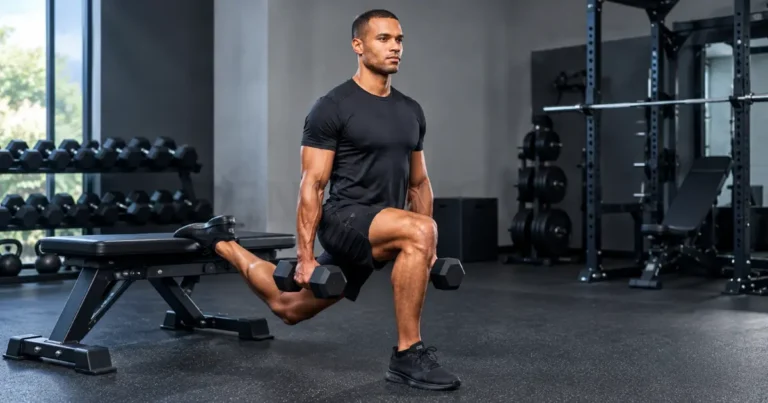
Wondering why your fitness progress has stalled? The secret lies in progressive overload, the core principle behind every successful training plan. Without consistently challenging your muscles, even the best workout routine will eventually stop delivering results. In this guide, we explain how this foundational concept works and share seven practical ways to safely apply it at the gym, at home, or outdoors.
Progressive Overload Definition: What It Means in Plain English
Progressive overload is a training principle in which you gradually raise the demand on your body so it keeps adapting. The American College of Sports Medicine (ACSM) lists it first among the core principles of resistance training progression, ahead of specificity and variation. “Overload” means a challenge slightly above what you handled before, not an extreme effort. For example, if you squatted 40 kg (88 lb) for 8 repetitions last week, a small step is 9 repetitions this week.
The Physiology Behind Progressive Overload and Adaptation
Your body adapts to the specific stress you place on it, and adaptation slows when that stress stops changing. In resistance training, a main stimulus is mechanical tension, meaning the force your muscle fibers produce and resist during a lift. Researchers also describe muscle damage and metabolic stress (chemical byproducts that build up during hard sets) as contributing factors. Tension rises with heavier loads and with sets taken closer to your limit.
After a session, your body raises muscle protein synthesis, the process that repairs and builds muscle proteins. Early in training, most strength gains come from your nervous system learning to recruit muscle fibers more efficiently, and visible muscle growth tends to follow after about two months. For example, a beginner who adds 5 kg (11 lb) to a leg press within three weeks has probably improved coordination before adding much muscle.
How Progressive Overload Drives Muscle Growth and Strength
Repeatedly raising the demand on your muscles drives growth and strength because they adapt to whatever you ask of them. The 2026 ACSM position stand reviewed 137 systematic reviews covering more than 30,000 participants and concluded that healthy adults should perform progressive resistance training. For strength, it points to loads of about 80% of one-repetition maximum (1RM, the heaviest weight you can lift once with good form) for 2 to 3 sets per exercise. For muscle growth (hypertrophy), it points to about 10 sets per muscle group each week.
The same review found that several popular details, including training to failure, machines versus free weights, and complex periodization (planned phases of training), did not consistently change results for healthy adults. In practice, steady progression matters more than the fine print. For example, a recreational lifter who adds one repetition or a small amount of weight each week follows the same principle as an experienced athlete. With the science covered, the next section lists seven practical ways to apply it.
Seven Ways to Apply Progressive Overload Training
There are seven practical ways to raise the demand of a training plan, and you only need to change one at a time. Choose the variable that fits your equipment and goal, change it by a small amount, and keep the others steady. That approach makes it easier to see what worked and to back off if something hurts. The seven methods are listed here and explained in the sections that follow.
- Load: lift a slightly heavier weight for the same repetitions.
- Repetitions: add reps within a target range.
- Sets: add sets to raise weekly volume.
- Technique: perform the same movement with better control.
- Range of motion: move through a fuller range that you can control.
- Tempo: slow the lowering phase or add a pause.
- Rest and density: do the same work in less time.
Adding Load: Small Increments With Fractional Plates
Adding load means lifting a slightly heavier weight for the same number of repetitions, and small steps make it sustainable. The ACSM 2009 position stand recommends a load increase of 2% to 10% once you can perform one to two repetitions more than your target. For example, adding 2.5 kg (5 lb) to a 60 kg (132 lb) bench press is about 4%, while a 5 kg (11 lb) jump is about 8%.
Standard plates often limit your options, because the smallest pair may add 2.5 kg (5 lb) or more to the bar. Fractional plates, also called microplates, weigh as little as 0.25 kg (0.5 lb) each, so you can add load in tiny steps through a method called microloading. This helps most when progress slows and a normal jump feels too large.
Adding Reps Within a Target Rep Range
Adding repetitions within a target range means performing more reps at the same weight before you raise the load. The ACSM recommends loads that allow 8 to 12 repetitions for people new to training, which leaves room to progress inside that range. You can use this approach with almost any progressive overload exercise, from squats to rows. For example, if you completed 8, 8, and 7 reps last week, aim for 9, 8, and 8 this week.
How Double Progression Works in Practice
Double progression is a method in which you add repetitions first and raise the weight only after you reach the top of your rep range. For example, you bench press 50 kg (110 lb) for 3 sets in an 8 to 12 range. When you complete 12, 12, and 12, you add 2.5 kg (5 lb), which is 5%, and expect about 9 or 10 reps again. Follow these steps:
- Pick a rep range, such as 8 to 12.
- Choose a weight you can lift at least 8 times with good form, leaving 1 to 3 reps in reserve (reps you could still perform).
- Add repetitions across sessions while your form stays steady.
- When every set reaches the top of the range, raise the load by 2% to 10%.
- Return to the lower end of the range and repeat.
Increasing Sets and Weekly Training Volume
Training volume is the total work you do, usually counted as hard sets per muscle group per week, and adding sets raises it. A 2017 meta-analysis of 15 studies found a graded relationship between weekly sets and muscle growth, with the largest gains at 10 or more sets per muscle group. The 2026 ACSM position stand likewise points to about 10 weekly sets for hypertrophy. Evidence above that point is less certain, and diminishing returns are possible.
Raise volume gradually, because sudden jumps can leave you sore and slow your recovery. A common approach is to add one set to one or two exercises per muscle group, such as moving from 8 to 9 weekly chest sets, and hold that volume for a few weeks. Adjust the pace to how well you recover, and avoid raising volume and load sharply in the same week.
Improving Technique, Range of Motion and Tempo
You can make a movement harder without adding weight by improving technique, using a fuller range of motion, or slowing the tempo. Better technique does not make a lift heavier, but it keeps the target muscles doing the work and lets you progress safely. A fuller range of motion means a longer path for the muscle, such as lowering a squat to a depth you can control or touching your chest to the floor in a push-up.
Tempo is the speed of each repetition. A 3-second lowering phase or a 1-second pause at the bottom raises difficulty at the same load, which is useful for bodyweight and band exercises. The 2026 ACSM review found that time under tension did not consistently change outcomes, so use tempo to improve control and add challenge, not as a guarantee of faster growth.
Reducing Rest Periods and Increasing Density
Training density means doing the same amount of work in less time, and you can raise it by shortening rest periods between sets. The ACSM 2009 position stand suggests 1 to 2 minutes of rest for sets of 6 to 12 repetitions aimed at muscle growth, and 3 to 5 minutes for heavy strength work. For example, you might trim rest on 3 sets of 10 from 120 seconds to 105 seconds while keeping the same weight.
Shorter rest has a cost. In a 2016 trial of 21 resistance-trained men, 3-minute rests produced greater strength gains and more growth in the front of the thigh than 1-minute rests over 8 weeks. Shorten rest only if you can still complete your target repetitions. With all seven methods defined, we can now organize them into a weekly plan.
Building a Progressive Overload Workout Plan
A progressive overload workout plan changes one variable at a time on a schedule, so you always know what drove your improvement. Start by choosing your training days: the ACSM 2009 position stand suggests 2 to 3 days per week for novices and 3 to 4 for intermediates. Record weight, repetitions, sets, rest, and how hard each set felt in a notebook or app. A written log makes small gains visible.
Linear Progression for Beginners
Linear progression means adding a small, fixed amount of weight or one repetition at regular intervals, and it suits beginners well. ACSM guidance for novices is whole-body training on 2 to 3 days per week with loads you can lift 8 to 12 times. Because improvement tends to be faster early on, many beginners can raise the load every one to two weeks at first. Your rate will slow as you gain experience, so a simple set of rules helps.
- Train all major muscle groups on 2 to 3 non-consecutive days per week.
- Start each exercise with a weight you can lift 8 to 12 times with good form.
- When you complete every planned repetition, add 1 to 2.5 kg (2 to 5 lb) to upper-body lifts and 2.5 to 5 kg (5 to 10 lb) to lower-body lifts.
- If you miss repetitions in two sessions in a row, repeat the weight or reduce it by about 10%, then rebuild.
These weight increments reflect common practice, not fixed guideline numbers. For example, a beginner who squats 3 sets of 8 at 30 kg (66 lb) can move to 32.5 kg (72 lb) the next week after finishing every repetition. If you are over 65, have a medical condition, or have not exercised for years, start lighter and ask your doctor or physiotherapist about a safe starting point.
Weekly Undulating Progression for Intermediates
Weekly undulating progression, also called undulating periodization, varies the load and repetitions from session to session within the week. For example, you might lift heavy for 5 repetitions on Monday, moderate for 8 on Wednesday, and light for 12 on Friday. The ACSM describes intermediates as people with about six months of consistent training, but its 2026 review found that periodization did not consistently change results, so treat this approach as an option.
Sample Eight-Week Progressive Overload Exercise Plan
This sample eight-week plan applies undulating progression to one lift, the back squat, across three sessions per week. The example lifter starts at 80 kg (176 lb) for 5 repetitions on the heavy day, 70 kg (154 lb) for 8 on the moderate day, and 60 kg (132 lb) for 12 on the light day, leaving about 2 repetitions in reserve.
- Weeks 1 and 2: 3 sets per session at the starting weights.
- Weeks 3 and 4: add a fourth set on the heavy and moderate days (more volume).
- Weeks 5 and 6: add 2.5 kg (5 lb) to each session if you completed every repetition with good form (more load).
- Week 7: repeat week 6 and aim for one extra repetition on the last set of each session.
- Week 8: drop to 2 sets per session at the same weights, then review your log.
This plan is an illustration, not a prescription, so adjust the weights to your own capacity and stop a set if your form breaks down. Many coaches schedule a lighter week like week 8, though evidence for its benefit is limited, so it is optional. If you do not have a barbell, the next section shows how to apply the same principle with bodyweight and bands.
Progressive Overload Without Heavy Weights
Yes, you can progress without heavy weights, because muscles respond to challenge rather than to a particular piece of equipment. The 2026 ACSM position stand reports that elastic bands, bodyweight exercises, and home-based routines produce marked benefits in strength, muscle size, and physical function. This matters in Europe, where the 2026 Eurobarometer found that parks and outdoor spaces (47%) are the most popular settings for exercise, ahead of fitness facilities (39%).
Applying Overload to Bodyweight and Band Exercises
You apply overload to bodyweight and band exercises by changing leverage, range, tempo, repetitions, or band tension. For example, you can move from 12 incline push-ups on a kitchen counter to a lower surface once you complete 3 sets of 12 with good form. Elastic bands add resistance as they stretch, but color codes vary between brands, so track repetitions and effort instead of color. Use these progression levers:
- Leverage: wall push-up, incline push-up, floor push-up, then feet-elevated push-up.
- Single-limb work: squat, split squat, then rear-foot-elevated split squat.
- Tempo and pauses: lower for 3 seconds or pause for 1 second at the hardest point.
- Repetitions and sets: add repetitions until you reach the top of your range, then change leverage.
- Band tension: use a thicker band or step further from the anchor to increase the stretch.
- Rest: shorten rest only if repetition quality stays the same.
Calisthenics progressions follow the same rules as barbell training: change one variable, keep form clean, and record what you did. Whatever equipment you use, progressing too fast is a common way to get hurt, which leads to the mistakes covered next.
Common Progressive Overload Mistakes and Injury Risk
The most common mistakes are progressing too quickly, sacrificing form for heavier weight, and changing too many variables at once. Overuse injuries tend to appear when load rises faster than your tendons, joints, and muscles can adapt, and tendons can adapt more slowly than muscle. For example, jumping from 60 kg (132 lb) to 70 kg (154 lb) is a 17% increase, well above the 2% to 10% range. Watch for these mistakes:
- Ego lifting: choosing a weight to impress others instead of one you can control.
- Poor form: letting technique slip to complete the last repetitions.
- Big jumps: raising weight or volume by large amounts.
- Too many changes: adjusting load, sets, and rest in the same week.
- Neglecting recovery: skimping on sleep, food, and rest days.
- Ignoring pain: training through sharp or lasting pain.
When Pain Signals You Have Progressed Too Fast
Pain that is sharp, sudden, or lasting suggests you may have progressed too fast, while mild, dull soreness is usually expected. Delayed onset muscle soreness (DOMS) typically begins one to three days after a workout and improves within a few days. Injury pain more often starts during an exercise and may come with swelling or weakness. When you are unsure, reduce the load or pause the exercise, and see a doctor or physiotherapist (physical therapist in the US) if you notice any of these warning signs:
- Sharp or stabbing pain starts during a lift, or you feel a pop.
- Soreness or pain has not improved after about a week.
- You notice swelling, bruising, weakness, or reduced range of motion.
- Pain continues at rest or wakes you at night.
- You feel numbness or tingling in an arm or leg.
Seek urgent medical care if severe muscle pain and weakness come with dark, tea-colored urine, because this combination can signal rhabdomyolysis, a serious breakdown of muscle tissue. Call your local emergency number (112 in the EU, 911 in the US) for chest pain, fainting, or trouble breathing. If you still have questions, the FAQs below answer three that readers ask most often.
Progressive Overload FAQs
The short answers to the three most common questions are to add weight in small steps, to expect progress to slow over time, and that the principle also applies to cardio. Each answer below explains the reasoning and the evidence behind it.
How Fast Should You Increase Weight Each Week?
Increase weight only when you complete your target repetitions, and keep each step small, typically 2% to 10%. The ACSM 2009 position stand uses this range once you can perform one to two repetitions over your target. In practice, that is often 2.5 kg (5 lb) on a bench press or squat. Some weeks you will add repetitions instead, and the gap between increases usually grows as you gain experience.
Can You Progressively Overload Every Session Forever?
No, because progress slows as you gain experience, and the ACSM notes that no one can keep improving at the same rate over long periods. When you reach a plateau, review sleep, food intake, stress, and recovery, then try smaller steps or a different variable. Maintaining your current level is also a valid goal, and the 2026 ACSM position stand stresses that consistent training matters more than a complicated program.
Does Progressive Overload Apply to Cardio Training?
Yes, the principle applies to cardio, where you gradually increase duration, frequency, or intensity to build endurance. A common guide is the 10% rule, which caps weekly increases at about 10%, but the evidence is mixed. A trial of more than 500 novice runners found no difference in injuries between a graded 10% plan and a standard plan, while a 2014 cohort study associated weekly distance jumps above 30% with higher risk for some injury types. We treat 10% as a cautious guide, not a rule.
Progressive overload works because small, planned increases give your body a steady reason to adapt. In this guide, we defined the principle, covered seven ways to apply it, explained how to build a plan for beginners and intermediates, showed how to progress without heavy weights, and described the warning signs of progressing too fast. If you have questions or experiences to share, leave a comment below, and talk with a healthcare professional before making large changes to your training.